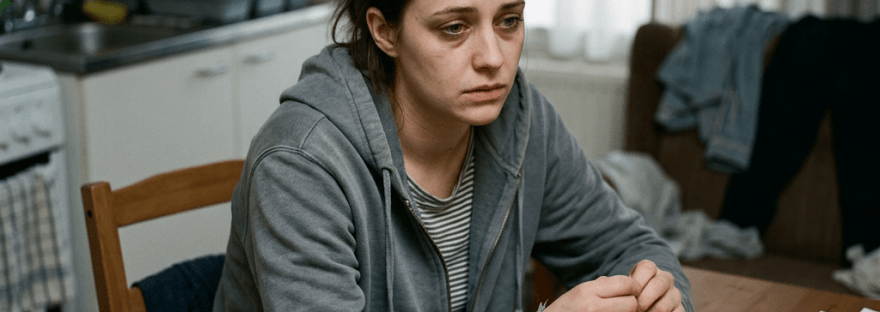
Worried woman sitting at a kitchen table with phone and papers

The Quiet Damage of Emotional Abuse

“I still don’t understand how he could control me so easily, like I was a puppet, and why I kept giving in every single time.” Tina said this much later, when she finally had the distance to see things clearly. At the time, she could feel something was wrong, but she did not have the words for it.

Eventually, she understood what it was.

Emotional abuse. 
Photo by RDNE Stock project on Pexels.com

You might think abuse should be obvious and easy to point out, but emotional abuse rarely works that way. It does not show up loudly, and it does not leave visible damage that others can see. Instead, it builds slowly and quietly, affecting how you think, how you feel, and how you see yourself.

You notice something feels off.
You feel drained after simple interactions.
You start questioning your own reactions.

And yet, you stay.

Over time, emotional abuse begins to weaken your sense of self in ways that are easy to miss at first. You may get blamed for things you did not do, while your emotions are dismissed as overreactions. Your version of events gets questioned so often that you begin doubting your own memory. At some point, your focus shifts, and instead of asking why this is happening, you start asking what is wrong with you.

That shift changes everything.

The person causing harm often does not look harmful to others, which makes your experience even harder to validate. They may come across as calm, reasonable, or even caring in public. When you try to speak up, you might hear that you are too sensitive or that you are creating problems. After a while, you start believing it.

You stop trusting yourself.
You stop explaining yourself.
You start staying quiet.

Emotional abuse is not limited to romantic relationships, and that is something people often overlook. It can exist between parents and children, friends, colleagues, or extended family members. Power usually plays a role, even if it is not obvious at first. One person slowly takes control, and the other adjusts just to avoid conflict.

You begin to shrink parts of yourself to keep things steady.

Certain patterns tend to repeat in these situations. You may experience subtle threats that create fear and keep you from speaking freely. Constant criticism can make you feel like nothing you do is enough, even when you are trying your best. Your opinions may get dismissed so often that you eventually stop expressing them, not because you agree, but because you feel exhausted.

You may also feel unwanted while still being expected to stay. That creates a confusing dynamic where you are present but not valued. Isolation can follow, where you slowly drift away from friends or family, sometimes due to guilt or pressure. As your world becomes smaller, your dependence on the same person increases.

Blame plays a strong role here as well. You may find yourself apologizing often, even when you are unsure what you did wrong. Over time, this creates a deeper belief that you are responsible for the situation. You may even start feeling sympathy for the person hurting you.

That is where it gets dangerous.

You begin to believe you deserve this.

If you are in a situation like this, start by being honest with yourself about how you feel in the relationship. Ask yourself if you feel safe, respected, and heard consistently. Notice if you are constantly second-guessing your thoughts or walking on edge around the other person.

Do you feel like yourself anymore?
Or are you adjusting just to avoid conflict?

Talking about your experience can help, even if others do not fully understand at first. Reaching out to a therapist or counselor can give you clarity and help you see patterns more objectively. Setting boundaries matters, but following through on them matters even more.

You do not need permission to protect your mental and emotional well-being.

And keep this clear in your mind as you move forward. Someone being perceived as good by others does not mean they are good for you. Your experience is valid, even if it is not visible to the outside world, and that distinction matters more than you think.

If you find yourself in a situation like this, reaching out for support can make a real difference. At Family Therapy India, you can speak with professionals who understand these patterns and can help you work through the challenges in your relationship in a healthier, more constructive way.

Phone/Whatsapp: +91-9179383554
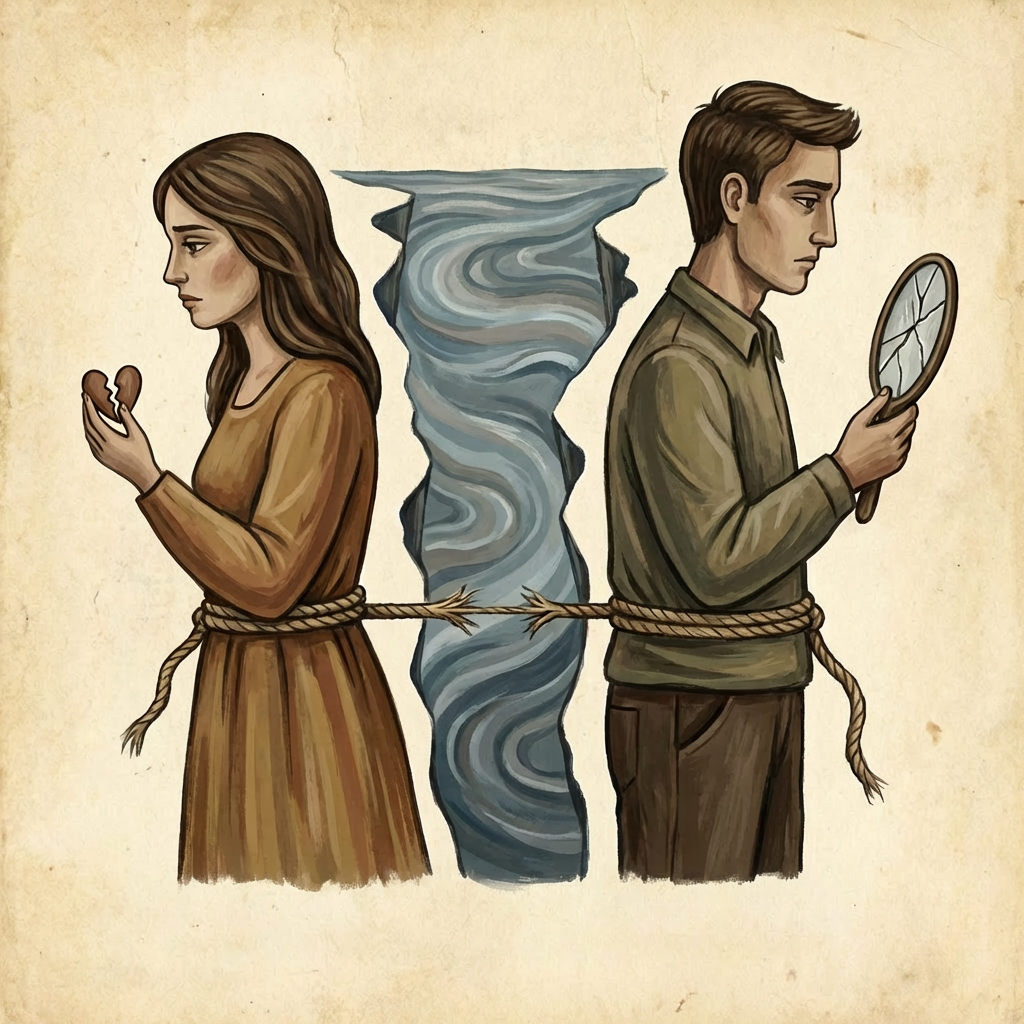
Man and woman back-to-back with a fraying rope and text reading "THE DISTANCE BETWEEN US".

Are You Losing Yourself in Your Relationship? Spot the Signs of Codependency

Manoj (name changed) started feeling drained just a few months into his marriage.

His wife, a doctor, had quit her job and slowly began depending on him for everything. Not just financially, but emotionally, mentally, even for the smallest day-to-day decisions.

She would call him repeatedly while he was at work. If he didn’t pick up, she expected him to drop everything and respond.

Now imagine being in his place.
How long before you start feeling suffocated?

Sasha (name changed) came in for therapy because of anxiety. But every time she was asked something, she looked at her partner to answer for her.

Even her own voice didn’t feel like hers anymore.

Here’s the thing.

Depending on someone you love? That’s normal.

But when that dependence starts taking over your ability to function on your own, it stops being healthy and starts becoming something else.

It turns into a kind of emotional addiction.

You start abandoning your own needs just to keep the other person okay.
Or you expect someone else to constantly regulate your emotions and decisions.

Either way, someone loses themselves.

Man and woman back-to-back with a fraying rope and text reading "THE DISTANCE BETWEEN US".

So what exactly is codependency?

It’s when one person relies heavily on another
or both people rely on each other

for emotional support, validation, decision-making, even self-worth.

And this doesn’t just show up in romantic relationships.

You’ll see it everywhere:

  • Parent and child
  • Friends
  • Coworkers
  • Partners
  • Even teacher-student dynamics

A parent-child version can get especially intense.

Some parents struggle to let their child grow, move out, or build an independent life.

And the child?
They often feel stuck between guilt and growth.

Is this just emotional support… or something deeper?

Humans are wired to depend on each other.

You don’t live life in isolation. You learn, adapt, and grow through people.

But pause and ask yourself this:

Can you function on your own?
Or does the idea of making decisions alone make you anxious?

Because when dependence starts interfering with your ability to think, decide, and act independently, it usually connects to deeper mental health struggles like:

  • Anxiety
  • Depression
  • Addiction
  • Low self-esteem
  • Chronic stress
  • Personality patterns like BPD or narcissism

Codependency in small amounts? Fine.

But when it starts replacing your sense of self, it chips away at your identity and your relationships.

Trust weakens.
Resentment builds.
And you start feeling stuck.

Where does codependency even come from?

Most of it traces back to childhood.

Not in an obvious way. But in subtle patterns you picked up early.

Think about this:

  • Did you grow up feeling judged or criticized often?
  • Did you feel ignored or emotionally unseen?
  • Did someone leave, creating a fear of abandonment?
  • Were your caregivers inconsistent, warm one day and distant the next?
  • Were your parents overly controlling?
  • Did you experience any form of trauma?
  • Did you grow up around untreated mental health issues?

When you grow up like this, you learn one thing fast:

Your needs are secondary.

And that belief quietly follows you into adult relationships.

How do you know if you’re codependent?

Look at your patterns honestly.

  • You struggle with self-worth
  • You constantly need validation
  • Saying “no” feels uncomfortable
  • You feel responsible for fixing other people
  • You chase perfection to feel accepted
  • You either try to control others or give them control over you

Now think about your relationships.

Do you:

  • Ask for permission for basic things?
  • Feel like you’re walking on eggshells?
  • Try to “fix” or rescue someone?
  • Take responsibility for their actions?
  • Sacrifice your comfort regularly?
  • Feel like you’ve lost who you are?

That’s what codependency starts to look like in real life.

A few situations that might hit close to home

  • A woman stays in an emotionally abusive relationship, hoping love will change her partner
  • A graduate turns down a dream opportunity just to stay close to a parent
  • An adult child moves back home and stops taking responsibility, while the parents enable it

None of these people are “weak.”

They’re stuck in patterns they learned long ago.

Can this be fixed?

Yes. But only if you’re willing to look at yourself honestly.

If ignored, codependency can deepen:

  • Anxiety
  • Depression
  • Emptiness
  • Loneliness

You might start feeling like you don’t even know who you are outside of your relationships.

That’s the real cost.

What actually helps?

Therapy plays a big role here.

  • CBT helps you break unhealthy thought patterns
  • Couples therapy improves communication and independence
  • Family therapy helps unpack long-standing dynamics

But beyond therapy, here’s something to sit with:

Can you be okay on your own?
Can you make decisions without needing reassurance?
Can you sit with discomfort without rushing to fix or please?

That’s where the real shift begins.

Codependency is learned. Which means it can be unlearned too.

And when that starts happening, your relationships stop feeling like survival…
and start feeling like choice.