Is your uncontrolled anger damaging your relationship with your spouse ?

Nothing else can be as fatal for the marital relationship as your anger. An uncontrolled anger is like a slow poison to the strong threads of relations between husband and wife .The uncontrolled anger virtually eats into the very roots of love,trust and respectability of both the partners .

I have observed while counseling estranged or opposing spouses that couples would often express their anger and resentment towards each other and after a while they tend to cool down when educated about their misplacement of their emotions or expectations from each other.

However heavens may help in situations where one of the spouses happen to have an uncontrolable anger . Such expression of constant complaints and anger often leads to physical abuse ,emotional accusations against each other and ultimate separation.

Anger is not so bad if used momentarily and allowed to subside and defused once it has been expressed. The message that the angry person has been upset over certain issues or acts of either spouse can be conveyed and thereafter both would do better to come to the levels of finding ways to negotiate peace and make amends .

There comes a stage when the partners need to involve a professional family therapist who can help them look at their differences or different perceptions in new light to sort out the disputes .Such intervention is arranged with a view to evolve newer and better emotional understanding amongst the couple ,even though the previous hurt still remains at the background. But the seething anger has been overcome as the partners give each other opportunities to grow their new closeness and understanding.

But many a times the harmed partner particularly wife finds it difficult to let go of the past and forgive her husband. Her anger seethes like a wild fire that knows no direction ,hovering over the relationship and destroying everything that comes in its path .Such situation finds no retrieval and the couple sooner or later ends up parting ways through legal separation,or finding it difficult to stay together peacefully.

A partner with such an uncontrolled anger often brings to the fore the mistakes of the other partner,by shaming him or her at every available opportunities,refuses to listen to any explanation by the partner and believes no compromise can be big enough to solve the problems which have arisen in their relationship.

An understanding partner can help coverup many shortcomings ,mistakes and at times blunders of the other partner unless it happens to be a complete erosion of trust and faith.But in the event of such a situation too,the partners need to sit together by letting the anger go and understand how to proceed with their relationship further or even give it a break by inflicting the minimum damage to the family and partners themselves.

It is important that both husband and wife should pay attention to their anger control and if they find that their relationship is getting affected by such frequent bursts of anger. They should consult a counseling psychologist and family therapist .A trained professional counselor and family therapist would help them with relevant anger management therapies including perceptive breathing exercises .

While there are enough advisors in every social circle to guide and help the estranged or fighting couples but such unprofessional approach unknowingly out of their ignorance can ignite more anger or mistrust towards each other often leading to frequent accusations. As far as possible couples should avoid such agony aunts for their own betterment .Repeated complaints, frequent bickerings and trying to put down the partner or staging a show down for your partner just because you are angry with him or her can on the contrary take the love out of relations,resulting into the damaged partner finding solace elsewhere .No partner in the right mind who values relationship would like to be in such an embarrassing situation .Anytime you feel angry with or at your partner ,give yourself sometime to think over if the confrontation can be through anger or matters can also be discussed without losing control and being firm in your tone and body language.

,If you have such  uncontrolled anger /domestic violence  situation You should come to us at Family Therapy India and we will help you resolve all issues of your marriage in more amicable manner .Find us @ http://www.familytherapyindia.com.

Email us @mansikpramarsh@gmail.com

Call: 09179383554,917314263087

Ramneek Kapoor – Family Therapist, Psychologist Counselor and Science of Living Expert .

Can Your Marriage Partner Be Really Your Best Friend?

Expecting a spouse to be both friend and lover is a relatively new concept. Some think it’s asking for too much while there are others who strongly believe their spouse can be the best friend.

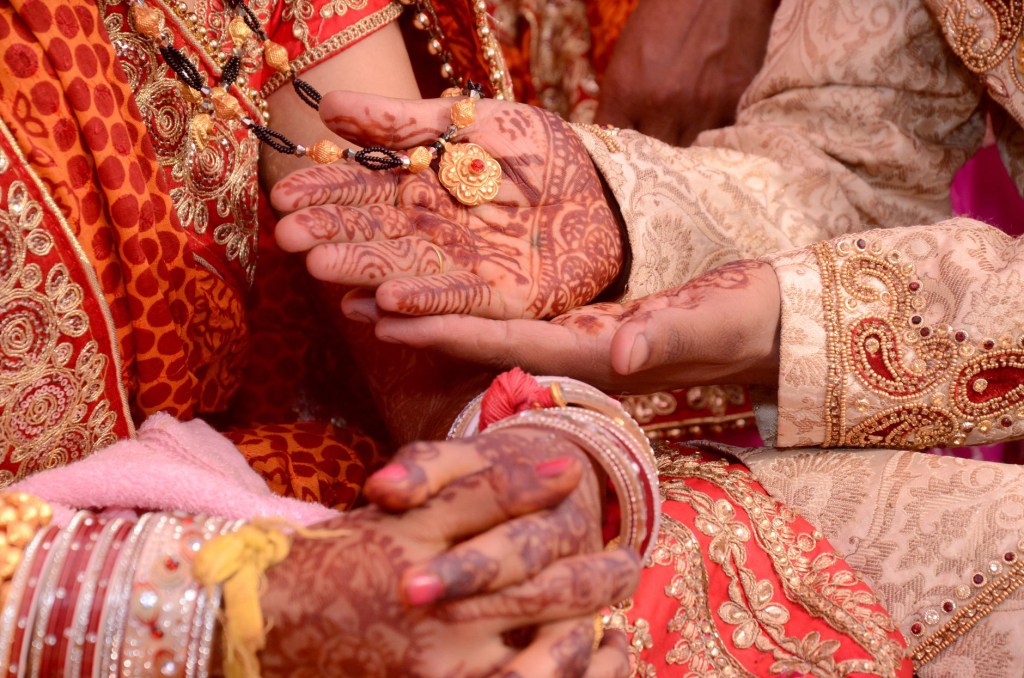
An Indian wedding ceremony

Rajshree* (name changed) is always talking about her husband’s good qualities. He is working hard for the family. He has always been a man of words, has a strong character, loyalist and trustworthy. He always shows kindness and integrity. She added “He is a loving father, loves to spend time with kids and he gives me full respect”.

But is he her best friend?

“No!” said Damini*(name changed) who is a home maker and mother of a five years old .

“I don’t have intimate relationship with my friends,” she explained. “I don’t live with my friends. And if I did, it would not have changed into marital relationship, I believe friends would not make good marital partners”.

However, there are also many youngsters who have a different viewpoint .

Growing up together

Rhea and Pinky*(names changed) had been classmates from their kindergarten days and grown together as good friends for a decade sitting next to each other in their classroom in school every day, sharing tiffin and other goodies. They even laughed and cried together in all those years.

Pinky had joined defence forces while Rhea pursued her career in law. They decided to get married when time came to do so .

As per Rhea , “I couldn’t think of getting hitched to somebody else because Pinky had always been my best friend”. “And who else can understand you better than your childhood friend”, says Rhea while echoing the same thoughts.

The belief that your partner should be selected from friends’ zone and will make the best spouse is the latest thought prevailing amongst the youngsters and many of them do get married to their best friends Take the case of Darsh* (name changed) who got married to Samar *(name changed) her friend from high school onward.

When this family therapist met some of these couples during the course of a therapy individually or in group, they had voiced their thoughts.

“We definitely wanted somebody who valued and supported us as a friend and not any stranger who meets us over a cup of coffee for a couple of hours and expects us to say “yes”.

However those who opposed this thought line were of the view that “getting married to the guy who has been your friend for long years would mean shifting so many equations of life . Suddenly a kind of difference of status comes in and the society expects the girl to be more respectful and an obeying kind wife to the guy”, said Ragini*(name changed) who had been married to the guy from the college but who had not been her friend.

It’s quite apparent that there are things we want from our friendship and there are some others or additional needs and expectations that we look for in a marital relationship.

But is it unreasonable to expect your husband to be your best friend, or is it the highest form of marital bliss.

The Change of Roles from Friends to Marriage Partners

While staying friends is fine but converting this to marriage does not mean it will stay as it was prior to marriage. It is important that we understand the roles as a couple that we need to play as members of family that would call for a bigger level of responsibilities in addition to a greater level of empathy, understandings and patience towards other members of family.

The couple, who began knowing each other in kindergarten, have been leading their lives separately as they grew up but the time spent away from each other made them realise how much they had wanted to be with each other.

Historically, we have had all kinds of marriages, the arranged ones and the marriages of lovers and friends with the majority tilting towards arranged ones with strangers .

But a relatively new age coming together of boys and girls into their careers, professions and even online friendships have brought a new awakening to the romantic relationships.

The couples now definitely are more career oriented and want their spouses to be of the same mindset where they can support and stand by each other in the progression of life. Indeed, a novel thought.

The roles have been changing for over a decade and a half now where the provider who used to be man earlier can be either one of the partners or a sharing responsibility prevails , sharing of money ,sharing of responsibility , sharing of taking care of kids and sharing of taking care of parents on both sides .

Indeed a new dawn of romantic relationship for some ,while some couples prefer to go old ways yet there are some who still struggle to find fulfilment of their expectations from marriage.

Setting up of realistic expectations on either side can help such people whether marrying a friend or other person who can be made a spouse first and a friend later .We all want our marriage to work for both and make life smoother (or Anand Ashram ) as I often call it and tell the couples visiting us, “A marriage is a two way partnership where both partners contribute equally ,sometimes the balance can tilt either way but ultimately a good balance can be achieved by respect ,love, empathy ,understanding, sharing ,trusting and being compassionate towards self and towards your partner”. One must ensure that you don’t expect everything one sided , a two way communication and two way sharing is what makes a good relationship grow.

A young married couple

Every relationship comes with loads of expectations of the couple and others of their respective families. It is not possible to get every dream, every fantasy and everything you’d wanted out of this relationship.

Not putting on the loads of expectations from either partner and sharing of responsibilities, being there for each other always and at all times may not be sometimes possible for a couple who’s into familial commitments too.

Adopting some, adapting a number of them and giving up a few of your preconceived ideas and looking at your partners, similar situation would always be helpful for the two of you to make it a smooth and enjoyable journey towards marital bliss. In a blissful marital relationship love may not always be visible. Likes and dislikes can change from time to time, demands can be made or met but what triumphs is your commitment and loyalty towards each other.

*All names have been changed and no real names have been used in order to maintain privacy of the people*

Young Children do not listen to their parents- Understanding Oppositional Defiant Disorder

A young lad  or lass in his or her teens  need to be paying attention to  the school curriculum and playing with the mates but instead if a child of this age become a problem for the family and the school , there is bound to be a cause and consternation amongst the family, teachers and the  well wishers of the child and the family.

Argument between mother and child

We have recently   been getting some   cases   of   young children behaving oddly in the families . The young ones  defy  their parents even for small errands .   They insist   on not going to schools . These children  refuse to listen to their parents. Some of them  go even to the extent of fighting   back with  their parents.

The parents have to understand that  children   usually are    defiant .They like to  oppose their parents  for many reasons. Obedience may not always be expected too.  We all will like to have independent thinking , self decision making children if the  decisions made by them meet our expectations.   During their  normal   growth and development  ,   individualism of human nature  does exert itself at times  when oppositional behavior  against the order and the expected  gets  expressed even by the young.

The  young children  want to grow up and their   desire to gain freedom  from control   gets  intense, around the ages of two and three,  and again  in early adolescent   years .

For  any parent however an uncooperative, disobedient   and aggressively hostile  behavior  of their  ward  becomes a serious issue when it is frequently ,  fiercely and arrogantly  expressed by the child.

Opposition of any kind  by the child becomes glaringly visible  when  it is  compared with other children’s    visible  obedient and docile  behavior .

This kind of  defiance and disobedience  gets very strainful  and stressful    for  the parents and other members of the    family.  It affects    the academic life  of the child in addition to being counted as an unsocial child within and outside the family circles .

Closing ears to the parents

Looking for the  the signs of  Oppositional  Defiant Disorder :  It’s not easy  for any parent to notice   differentiation   between normal defiance and the  oppositional defiant disorder (ODD) from age related  normal defiant  behavior by their children  . Symptoms of the disorder start appearing , in noticeable happenings on various occasions.

Child and parental conflict related   problems   are common in  families.

Families have various levels of tolerance for the opposition by their children . In some, a disgruntlement to  the rules produces major stress for the parents , while in more friendly , social and  tolerant families , opposition by children and occurrences of bad behaviors  by the kids  are largely overlooked till such times as  they cause relationship  problems .

In children  affected  with ODD,  a  systematic pattern of , anger,  aggression and the uncooperative, defiant, and aggressive  behavior toward authority can be seen. Such opposition by the young ones  regularly hampers  the  day to day functioning within the family . The children suffering get flayed tempers at times. These  children become hot headed and short tempered.

They  argue with adults. They take pleasure in fighting back against  adult rules.They refuse even minor  adult requests. They look for opportunities to   deliberately annoy others.

The same defiance continues – at home, in school, in the neighborhood .

Such behavior is not necessarily the  result of a conflict with a particular parent or teacher.

They begin with holding  others responsible for their mistakes.They   become grumbling kind and they often behave  touchy, arrogant , resentful, spiteful and  vindictive. Some children engage in mild physical aggression and fight back physically too . Their language   becomes  aggressive, abusive and  obscene. A kind of  power struggle within the family  begins  with these children.  

Their  struggle may be noticed in terms of food for choice, clothes to wear or simply in selecting a place to sit too.  During infancy  oppositional episodes must have occurred at the time of their  feeding,  eating, toilet training, and sleeping  etc. , but went unnoticed because of motherly love and affection . Children  with ODD regularly insist on postponing the work in home and at school and  they find strange reasons to  procrastinate.

They  ignore parental directions and their teachers orders. They would often   pretend  to forget or fail to hear . They are often referred to for memory exercises but we have to understand  that it is not the memory or hearing problem but the problem relates to   obeying what was expected of them.

As the child grows up the issues such as  keeping the room neat,  taking baths, doing home work on time , not watching television for longer times, not interrupting  while elders are talking or talking back, crop up.

In all such small    small quarrels and fights , winning becomes the most important aspect of their  struggle. At times a child with ODD will deliberately forego and rather lose  cherished privileges, in order to prove a point and win  the argument. The child will   exhibit .continuous opposition within the home environment. He or she will act completely  resistant and uncooperative  in the class room . On a serious side   the child continues with his or her defiance towards the established  authority . The child may not be in a position to understand the  difficulties or even get an inkling of his or her being in the wrong.

Such children as said earlier look for the reasons of their  troubles in others   behavior and in the other circumstances. external circumstances. There is always an inherent scant respect for the   the rules and discipline.  The child enjoys  challenging anyone who exhibits some kind of authority.

How can we help youAt Family Therapy India ,our special program for managing Oppositional Defiance Disorder  is supported to help children and adults to overcome the symptoms associated with ODD by our regular daily counseling sessions/mental exercises/ preksha meditation and Kayotsarg. Hundreds have benefited, it is your /your child’s turn now.  Call 09179383554 or email: mansikpramarsh@gmail.com.

Family is everything

How does work affect your marital health?

A normal workday in office.

Yes it could be shocking to learn that the avocation we all take to make money and keep the life going , sometimes can be detrimental to a good marital relationship creating an unfathomable distance amongst the partners to the marriage vows .

Working that helps make money is essentially a prime requirement to a marriage preposition in modern times where both partners want to and must have their financial freedom ,realise their own dreams and wishes ,in addition to other social factors .

It is generally seen that and rightfully too ,post marriage each partner values his or her own professional identify which must have been achieved after much hard work and scholarship .

Nowadays personal careers and the progression therein are becoming important for both the individuals and none would like to give it up and compromise the professional growth .

Take the case of this couple who had been in a very passionate relationship for number of years before getting married. They have been together in school and university and had carved out a career in the same field as well .

After a few years of their marriage the wife got the opportunity of going to US on an international assignment .However husband’s family and her spouse never wanted her to go alone abroad .

They wanted her to pass on the opportunity until her husband could find such an option for himself too .

Their disagreement resulted into a marital discord . They almost had decided to part ways till they approached this family therapist . The families eventually agreed that husband and wife can visit each other on and off during her assignment abroad .

A work from home couple.

But it may not be true for everyone .Working is generally good for mental and emotional well-being. It provides a sense of purpose, money , identity and a disciplined life style. But depending on where you work, what you do, and what resources and support systems you have, work can also undermine your mental ,emotional and physical health thus compromising the marital relationship.

Work factors that may compromise your marital health can be :

  • Stress :A real killer of mood and emotions ,can interrupt relationships and undermine self belief.
  • Many of serious chronic health issues e.g. insomnia , high blood pressure, diabetes, heart problems, and a number of other health issues are tied to .stress . A constant high-stress at the work place environment can still leave its mark on your state of mind and effect companionship.
  • Burnout : Burnout happens to a be silent creeper kind , is realised only when the body and the mind completely give up .Burnout many a times misdiagnosed as depression can be a real detrimental to a good relationship.
  • Status comparisons between the partners on account of positions ,sense of competitions if they happen to be in the same field ,recognition etc have been seen as cause of jealousy amongst partners .A doctor couple even after a long marriage ,(where both partners were eye specialists) had a very rough time till this family therapist made them realise their professional rivalry, being the cause of their regular marital discord .
  • Work environment insecurity: Although the work places nowadays have both men and women working there and a sense of bon homie prevails yet an insecure partner can feel threatened when not finding similar professional environment at his or her work place .An engineer working in a government organisation developed such an insecurity about his marital relationship because of his wife working amongst other male colleagues .

Working in different cities and a long distance marital relationship is also often threatened by fidelity insecurity . It is not necessary that infidelity takes place when living far away from a marriage house ; distressing doubts ,delusions or thoughts have often been seen amongst partners working together in the same city too .However partners do find a distance relationship offering greater difficulties .

Calling long distance.

What to do if your work is harming your marital Relationship?

  • Prioritise Self -care : Self-care is very important for our physical, mental, and emotional health. If both the partners aren’t taking care of yourself in simple ways, like getting enough sleep, eating healthfully, and exercising regularly, your work and the work at home may become more stressful. Learn how to practice self-care both at home and at work, such as eating the right kind of food containing adequate calories and proteins ,not skipping meals and medicine in addition to drinking enough water through the day.
  • Practice mind calming and stress management : By learning and practicing mind calming breathing and relaxing exercises you can manage your stress well .
  • Identify and set up boundaries : setting up boundaries at work both in terms of relationship ,personal life and time schedule can be little difficult but it will make your life much easier to live .This is necessary to set up boundaries of time schedule ,answering calls or attending to emails for those who work from home to ensure much needed time for personal life with family.
  • Establish two way communication street at home : it’s important to establish two ways communication both at work and home but more so at home with the family .Selective mutism and not talking gives an impression that you aren’t paying attention to what the partner ,the kids or the other members of family At the same time not allowing others to speak too can cause resentment.Hence establish emotional connects at home .
  • Seek professional help when needed : it always helps to talk with a professional family therapist ,to understand the issues involved,the conflicts causing situations both at home and work and seek good solutions .You can speak to us at http://www.familytherapyindia.com
  • Or http://www.mansikpramarsh.co
  • Of course we are always there to help .
Family is always first.

Understanding the Real Causes Behind Oppositional Behaviours in Adolescents

Note: The names and stories in this article are fictional and used to illustrate common scenarios faced by adolescents.

Joseph, a twelve-year-old boy, never quite understood why he was constantly at odds with those around him. Whenever he tried to express himself at home or school, his words were often misinterpreted as defiance. His father would rebuke him, and his mother would end up in tears, often blaming Joseph for the conflict. At school, he was labeled the troublemaker, isolated by teachers and peers alike.

Jatin, a thirteen-year-old, faced a similar fate. His teacher singled him out as the class disruptor, forcing him to sit away from his classmates, amplifying his feelings of embarrassment and rejection. Every time noise erupted in the classroom, Jatin was the first to be blamed, even when the real culprits were other students. Despite recognising his innocence later, the teacher rarely corrected the misunderstanding.

Swara’s parents were equally puzzled. Their once calm daughter had begun shouting back at them and her teachers, behavior they couldn’t comprehend. They viewed it as sulking and brought her to therapy, hoping for a quick fix.

Photo by Stephen Andrews on Pexels.com

These cases are not isolated. Many children and adolescents, like Joseph, Jatin, and Swara, are often labeled by parents and teachers as defiant, difficult, or problematic. They are frequently referred to psychologists or psychiatrists for behavior correction and treatment for Oppositional Defiant Disorder (ODD), ADHD, or similar issues. Concerns about aggressive outbursts, disrespect, truancy, self-harm threats, and even suicide attempts often drive parents to seek professional help. However, what often goes unnoticed is the underlying stress, trauma, and unhealthy family dynamics that contribute to these outward behaviors.

Teachers typically report uncooperative behavior to parents, who, in turn, resort to punishments or admonishments when corrective efforts fail. When these measures prove ineffective, they turn to mental health professionals with one primary expectation: “Just fix my kid.” Unfortunately, this approach overlooks the crucial role that parental involvement and a supportive, positive environment at school can play in managing and improving these behaviors.

Therapy alone is often not enough. Adolescents with ADHD, Dissocial Behavior, or Adjustment Disorder are likely to regress if they return to a negative or unsupportive environment at home or school. Without addressing the root causes and making holistic changes, relapse is almost inevitable.

In Joseph’s case, a few changes at school, combined with the support of an understanding teacher, led to significant improvement. He went from being labeled a troublemaker to becoming a favorite student among his teachers. Similarly, Swara’s parents became actively involved in her therapy, learning to adjust their expectations and create a healthier family environment. As a result, Swara became more tolerant and communicative, leading to a harmonious household.

Photo by Alexander Grey on Pexels.com

We’ve observed that a comprehensive approach involving the entire family, as well as collaboration with school teachers, is the most effective way to treat conditions like ODD, ADD, ADHD, and Dissocial Disorder. At Family Therapy India and Alka Mansik Pramarsh Foundation, we advocate for a top-down approach that includes active participation from both parents and teachers. This holistic method has proven to bring about positive, lasting changes in the behavior and emotional well-being of children and adolescents without resorting to medication.

It’s important to recognize that behavioral challenges in adolescents are rarely about defiance alone. They are often expressions of deeper struggles that require understanding, compassion, and a collective effort from families, schools, and therapists to create a nurturing environment for these young individuals to thrive.