
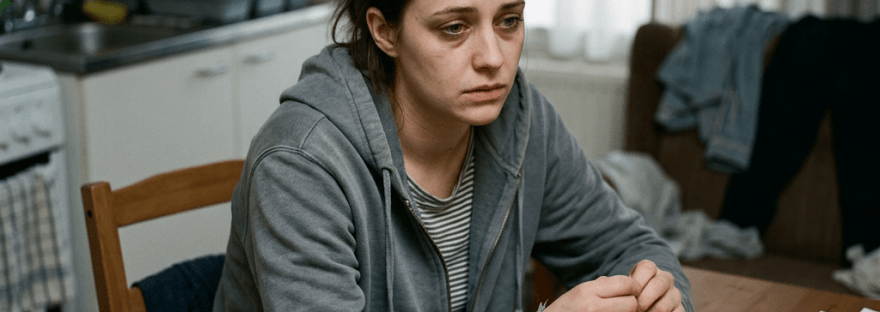
“I still don’t understand how he could control me so easily, like I was a puppet, and why I kept giving in every single time.” Tina said this much later, when she finally had the distance to see things clearly. At the time, she could feel something was wrong, but she did not have the words for it.
Eventually, she understood what it was.
Emotional abuse.

You might think abuse should be obvious and easy to point out, but emotional abuse rarely works that way. It does not show up loudly, and it does not leave visible damage that others can see. Instead, it builds slowly and quietly, affecting how you think, how you feel, and how you see yourself.
You notice something feels off.
You feel drained after simple interactions.
You start questioning your own reactions.
And yet, you stay.
Over time, emotional abuse begins to weaken your sense of self in ways that are easy to miss at first. You may get blamed for things you did not do, while your emotions are dismissed as overreactions. Your version of events gets questioned so often that you begin doubting your own memory. At some point, your focus shifts, and instead of asking why this is happening, you start asking what is wrong with you.
That shift changes everything.
The person causing harm often does not look harmful to others, which makes your experience even harder to validate. They may come across as calm, reasonable, or even caring in public. When you try to speak up, you might hear that you are too sensitive or that you are creating problems. After a while, you start believing it.
You stop trusting yourself.
You stop explaining yourself.
You start staying quiet.
Emotional abuse is not limited to romantic relationships, and that is something people often overlook. It can exist between parents and children, friends, colleagues, or extended family members. Power usually plays a role, even if it is not obvious at first. One person slowly takes control, and the other adjusts just to avoid conflict.
You begin to shrink parts of yourself to keep things steady.
Certain patterns tend to repeat in these situations. You may experience subtle threats that create fear and keep you from speaking freely. Constant criticism can make you feel like nothing you do is enough, even when you are trying your best. Your opinions may get dismissed so often that you eventually stop expressing them, not because you agree, but because you feel exhausted.
You may also feel unwanted while still being expected to stay. That creates a confusing dynamic where you are present but not valued. Isolation can follow, where you slowly drift away from friends or family, sometimes due to guilt or pressure. As your world becomes smaller, your dependence on the same person increases.
Blame plays a strong role here as well. You may find yourself apologizing often, even when you are unsure what you did wrong. Over time, this creates a deeper belief that you are responsible for the situation. You may even start feeling sympathy for the person hurting you.
That is where it gets dangerous.
You begin to believe you deserve this.
If you are in a situation like this, start by being honest with yourself about how you feel in the relationship. Ask yourself if you feel safe, respected, and heard consistently. Notice if you are constantly second-guessing your thoughts or walking on edge around the other person.
Do you feel like yourself anymore?
Or are you adjusting just to avoid conflict?
Talking about your experience can help, even if others do not fully understand at first. Reaching out to a therapist or counselor can give you clarity and help you see patterns more objectively. Setting boundaries matters, but following through on them matters even more.
You do not need permission to protect your mental and emotional well-being.
And keep this clear in your mind as you move forward. Someone being perceived as good by others does not mean they are good for you. Your experience is valid, even if it is not visible to the outside world, and that distinction matters more than you think.
If you find yourself in a situation like this, reaching out for support can make a real difference. At Family Therapy India, you can speak with professionals who understand these patterns and can help you work through the challenges in your relationship in a healthier, more constructive way.
Phone/Whatsapp: +91-9179383554

