
Can Your Marriage Partner Be Really Your Best Friend?

Expecting a spouse to be both friend and lover is a relatively new concept. Some think it’s asking for too much while there are others who strongly believe their spouse can be the best friend.
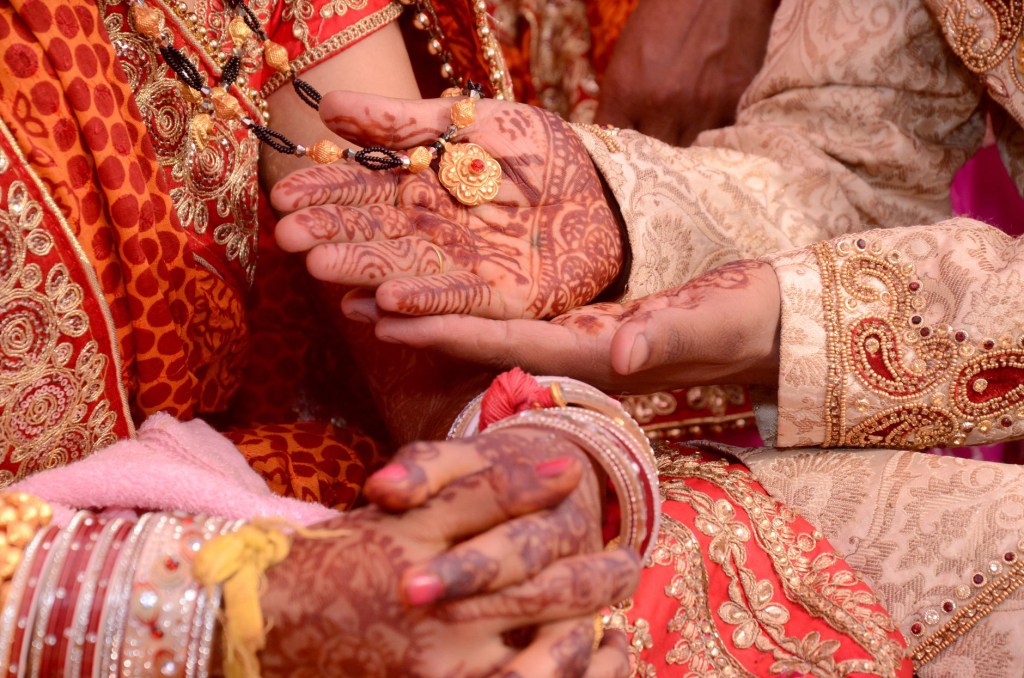
An Indian wedding ceremony

Rajshree* (name changed) is always talking about her husband’s good qualities. He is working hard for the family. He has always been a man of words, has a strong character, loyalist and trustworthy. He always shows kindness and integrity. She added “He is a loving father, loves to spend time with kids and he gives me full respect”.

But is he her best friend?

“No!” said Damini*(name changed) who is a home maker and mother of a five years old .

“I don’t have intimate relationship with my friends,” she explained. “I don’t live with my friends. And if I did, it would not have changed into marital relationship, I believe friends would not make good marital partners”.

However, there are also many youngsters who have a different viewpoint .

Growing up together

Rhea and Pinky*(names changed) had been classmates from their kindergarten days and grown together as good friends for a decade sitting next to each other in their classroom in school every day, sharing tiffin and other goodies. They even laughed and cried together in all those years.

Pinky had joined defence forces while Rhea pursued her career in law. They decided to get married when time came to do so .

As per Rhea , “I couldn’t think of getting hitched to somebody else because Pinky had always been my best friend”. “And who else can understand you better than your childhood friend”, says Rhea while echoing the same thoughts.

The belief that your partner should be selected from friends’ zone and will make the best spouse is the latest thought prevailing amongst the youngsters and many of them do get married to their best friends Take the case of Darsh* (name changed) who got married to Samar *(name changed) her friend from high school onward.

When this family therapist met some of these couples during the course of a therapy individually or in group, they had voiced their thoughts.

“We definitely wanted somebody who valued and supported us as a friend and not any stranger who meets us over a cup of coffee for a couple of hours and expects us to say “yes”.

However those who opposed this thought line were of the view that “getting married to the guy who has been your friend for long years would mean shifting so many equations of life . Suddenly a kind of difference of status comes in and the society expects the girl to be more respectful and an obeying kind wife to the guy”, said Ragini*(name changed) who had been married to the guy from the college but who had not been her friend.

It’s quite apparent that there are things we want from our friendship and there are some others or additional needs and expectations that we look for in a marital relationship.

But is it unreasonable to expect your husband to be your best friend, or is it the highest form of marital bliss.

The Change of Roles from Friends to Marriage Partners

While staying friends is fine but converting this to marriage does not mean it will stay as it was prior to marriage. It is important that we understand the roles as a couple that we need to play as members of family that would call for a bigger level of responsibilities in addition to a greater level of empathy, understandings and patience towards other members of family.

The couple, who began knowing each other in kindergarten, have been leading their lives separately as they grew up but the time spent away from each other made them realise how much they had wanted to be with each other.

Historically, we have had all kinds of marriages, the arranged ones and the marriages of lovers and friends with the majority tilting towards arranged ones with strangers .

But a relatively new age coming together of boys and girls into their careers, professions and even online friendships have brought a new awakening to the romantic relationships.

The couples now definitely are more career oriented and want their spouses to be of the same mindset where they can support and stand by each other in the progression of life. Indeed, a novel thought.

The roles have been changing for over a decade and a half now where the provider who used to be man earlier can be either one of the partners or a sharing responsibility prevails , sharing of money ,sharing of responsibility , sharing of taking care of kids and sharing of taking care of parents on both sides .

Indeed a new dawn of romantic relationship for some ,while some couples prefer to go old ways yet there are some who still struggle to find fulfilment of their expectations from marriage.

Setting up of realistic expectations on either side can help such people whether marrying a friend or other person who can be made a spouse first and a friend later .We all want our marriage to work for both and make life smoother (or Anand Ashram ) as I often call it and tell the couples visiting us, “A marriage is a two way partnership where both partners contribute equally ,sometimes the balance can tilt either way but ultimately a good balance can be achieved by respect ,love, empathy ,understanding, sharing ,trusting and being compassionate towards self and towards your partner”. One must ensure that you don’t expect everything one sided , a two way communication and two way sharing is what makes a good relationship grow.

A young married couple

Every relationship comes with loads of expectations of the couple and others of their respective families. It is not possible to get every dream, every fantasy and everything you’d wanted out of this relationship.

Not putting on the loads of expectations from either partner and sharing of responsibilities, being there for each other always and at all times may not be sometimes possible for a couple who’s into familial commitments too.

Adopting some, adapting a number of them and giving up a few of your preconceived ideas and looking at your partners, similar situation would always be helpful for the two of you to make it a smooth and enjoyable journey towards marital bliss. In a blissful marital relationship love may not always be visible. Likes and dislikes can change from time to time, demands can be made or met but what triumphs is your commitment and loyalty towards each other.

*All names have been changed and no real names have been used in order to maintain privacy of the people*


Young Children do not listen to their parents- Understanding Oppositional Defiant Disorder

A young lad  or lass in his or her teens  need to be paying attention to  the school curriculum and playing with the mates but instead if a child of this age become a problem for the family and the school , there is bound to be a cause and consternation amongst the family, teachers and the  well wishers of the child and the family.

Argument between mother and child

We have recently   been getting some   cases   of   young children behaving oddly in the families . The young ones  defy  their parents even for small errands .   They insist   on not going to schools . These children  refuse to listen to their parents. Some of them  go even to the extent of fighting   back with  their parents.

The parents have to understand that  children   usually are    defiant .They like to  oppose their parents  for many reasons. Obedience may not always be expected too.  We all will like to have independent thinking , self decision making children if the  decisions made by them meet our expectations.   During their  normal   growth and development  ,   individualism of human nature  does exert itself at times  when oppositional behavior  against the order and the expected  gets  expressed even by the young.

The  young children  want to grow up and their   desire to gain freedom  from control   gets  intense, around the ages of two and three,  and again  in early adolescent   years .

For  any parent however an uncooperative, disobedient   and aggressively hostile  behavior  of their  ward  becomes a serious issue when it is frequently ,  fiercely and arrogantly  expressed by the child.

Opposition of any kind  by the child becomes glaringly visible  when  it is  compared with other children’s    visible  obedient and docile  behavior .

This kind of  defiance and disobedience  gets very strainful  and stressful    for  the parents and other members of the    family.  It affects    the academic life  of the child in addition to being counted as an unsocial child within and outside the family circles .

Closing ears to the parents

Looking for the  the signs of  Oppositional  Defiant Disorder :  It’s not easy  for any parent to notice   differentiation   between normal defiance and the  oppositional defiant disorder (ODD) from age related  normal defiant  behavior by their children  . Symptoms of the disorder start appearing , in noticeable happenings on various occasions.

Child and parental conflict related   problems   are common in  families.

Families have various levels of tolerance for the opposition by their children . In some, a disgruntlement to  the rules produces major stress for the parents , while in more friendly , social and  tolerant families , opposition by children and occurrences of bad behaviors  by the kids  are largely overlooked till such times as  they cause relationship  problems .

In children  affected  with ODD,  a  systematic pattern of , anger,  aggression and the uncooperative, defiant, and aggressive  behavior toward authority can be seen. Such opposition by the young ones  regularly hampers  the  day to day functioning within the family . The children suffering get flayed tempers at times. These  children become hot headed and short tempered.

They  argue with adults. They take pleasure in fighting back against  adult rules.They refuse even minor  adult requests. They look for opportunities to   deliberately annoy others.

The same defiance continues – at home, in school, in the neighborhood .

Such behavior is not necessarily the  result of a conflict with a particular parent or teacher.

They begin with holding  others responsible for their mistakes.They   become grumbling kind and they often behave  touchy, arrogant , resentful, spiteful and  vindictive. Some children engage in mild physical aggression and fight back physically too . Their language   becomes  aggressive, abusive and  obscene. A kind of  power struggle within the family  begins  with these children.  

Their  struggle may be noticed in terms of food for choice, clothes to wear or simply in selecting a place to sit too.  During infancy  oppositional episodes must have occurred at the time of their  feeding,  eating, toilet training, and sleeping  etc. , but went unnoticed because of motherly love and affection . Children  with ODD regularly insist on postponing the work in home and at school and  they find strange reasons to  procrastinate.

They  ignore parental directions and their teachers orders. They would often   pretend  to forget or fail to hear . They are often referred to for memory exercises but we have to understand  that it is not the memory or hearing problem but the problem relates to   obeying what was expected of them.

As the child grows up the issues such as  keeping the room neat,  taking baths, doing home work on time , not watching television for longer times, not interrupting  while elders are talking or talking back, crop up.

In all such small    small quarrels and fights , winning becomes the most important aspect of their  struggle. At times a child with ODD will deliberately forego and rather lose  cherished privileges, in order to prove a point and win  the argument. The child will   exhibit .continuous opposition within the home environment. He or she will act completely  resistant and uncooperative  in the class room . On a serious side   the child continues with his or her defiance towards the established  authority . The child may not be in a position to understand the  difficulties or even get an inkling of his or her being in the wrong.

Such children as said earlier look for the reasons of their  troubles in others   behavior and in the other circumstances. external circumstances. There is always an inherent scant respect for the   the rules and discipline.  The child enjoys  challenging anyone who exhibits some kind of authority.

How can we help youAt Family Therapy India ,our special program for managing Oppositional Defiance Disorder  is supported to help children and adults to overcome the symptoms associated with ODD by our regular daily counseling sessions/mental exercises/ preksha meditation and Kayotsarg. Hundreds have benefited, it is your /your child’s turn now.  Call 09179383554 or email: mansikpramarsh@gmail.com.

Family is everything

How does work affect your marital health?

A normal workday in office.

Yes it could be shocking to learn that the avocation we all take to make money and keep the life going , sometimes can be detrimental to a good marital relationship creating an unfathomable distance amongst the partners to the marriage vows .

Working that helps make money is essentially a prime requirement to a marriage preposition in modern times where both partners want to and must have their financial freedom ,realise their own dreams and wishes ,in addition to other social factors .

It is generally seen that and rightfully too ,post marriage each partner values his or her own professional identify which must have been achieved after much hard work and scholarship .

Nowadays personal careers and the progression therein are becoming important for both the individuals and none would like to give it up and compromise the professional growth .

Take the case of this couple who had been in a very passionate relationship for number of years before getting married. They have been together in school and university and had carved out a career in the same field as well .

After a few years of their marriage the wife got the opportunity of going to US on an international assignment .However husband’s family and her spouse never wanted her to go alone abroad .

They wanted her to pass on the opportunity until her husband could find such an option for himself too .

Their disagreement resulted into a marital discord . They almost had decided to part ways till they approached this family therapist . The families eventually agreed that husband and wife can visit each other on and off during her assignment abroad .

A work from home couple.

But it may not be true for everyone .Working is generally good for mental and emotional well-being. It provides a sense of purpose, money , identity and a disciplined life style. But depending on where you work, what you do, and what resources and support systems you have, work can also undermine your mental ,emotional and physical health thus compromising the marital relationship.

Work factors that may compromise your marital health can be :

  • Stress :A real killer of mood and emotions ,can interrupt relationships and undermine self belief.
  • Many of serious chronic health issues e.g. insomnia , high blood pressure, diabetes, heart problems, and a number of other health issues are tied to .stress . A constant high-stress at the work place environment can still leave its mark on your state of mind and effect companionship.
  • Burnout : Burnout happens to a be silent creeper kind , is realised only when the body and the mind completely give up .Burnout many a times misdiagnosed as depression can be a real detrimental to a good relationship.
  • Status comparisons between the partners on account of positions ,sense of competitions if they happen to be in the same field ,recognition etc have been seen as cause of jealousy amongst partners .A doctor couple even after a long marriage ,(where both partners were eye specialists) had a very rough time till this family therapist made them realise their professional rivalry, being the cause of their regular marital discord .
  • Work environment insecurity: Although the work places nowadays have both men and women working there and a sense of bon homie prevails yet an insecure partner can feel threatened when not finding similar professional environment at his or her work place .An engineer working in a government organisation developed such an insecurity about his marital relationship because of his wife working amongst other male colleagues .

Working in different cities and a long distance marital relationship is also often threatened by fidelity insecurity . It is not necessary that infidelity takes place when living far away from a marriage house ; distressing doubts ,delusions or thoughts have often been seen amongst partners working together in the same city too .However partners do find a distance relationship offering greater difficulties .

Calling long distance.

What to do if your work is harming your marital Relationship?

  • Prioritise Self -care : Self-care is very important for our physical, mental, and emotional health. If both the partners aren’t taking care of yourself in simple ways, like getting enough sleep, eating healthfully, and exercising regularly, your work and the work at home may become more stressful. Learn how to practice self-care both at home and at work, such as eating the right kind of food containing adequate calories and proteins ,not skipping meals and medicine in addition to drinking enough water through the day.
  • Practice mind calming and stress management : By learning and practicing mind calming breathing and relaxing exercises you can manage your stress well .
  • Identify and set up boundaries : setting up boundaries at work both in terms of relationship ,personal life and time schedule can be little difficult but it will make your life much easier to live .This is necessary to set up boundaries of time schedule ,answering calls or attending to emails for those who work from home to ensure much needed time for personal life with family.
  • Establish two way communication street at home : it’s important to establish two ways communication both at work and home but more so at home with the family .Selective mutism and not talking gives an impression that you aren’t paying attention to what the partner ,the kids or the other members of family At the same time not allowing others to speak too can cause resentment.Hence establish emotional connects at home .
  • Seek professional help when needed : it always helps to talk with a professional family therapist ,to understand the issues involved,the conflicts causing situations both at home and work and seek good solutions .You can speak to us at http://www.familytherapyindia.com
  • Or http://www.mansikpramarsh.co
  • Of course we are always there to help .
Family is always first.

Everything you wanted to know about couple therapy..

Family therapist during meeting with a couple

In a country where approaching a psychiatrist/psychologist brings with it all kinds of taboos, fears and the unknown stigmas, reaching out to a family therapist by a couple simply can be a big uphill task. Most often the couple would prefer suffering in silence in their day to day disagreement and dispute rather than approach a professional family therapist. Approaching a therapist is often looked at as a step to lodging complaint against the partner. Couples shy off from reaching for the professional help because they do not want to disclose the problems they are having in their marriage to the family for one simple reason,”What would the people say “.

Let’s understand when do you need to approach a therapist and what process would couple therapy involve.

When you feel your communication with the spouse ends up into irritation and leads to the stomping of feet and rushing out of even a normal discussion quite regularly, the time to reflect is now.

When you feel your love has vanished and your acceptance of each other has been going down day by day, you need to be in touch with a family counselor.

When you carry strong resentment towards your partner on any account ,you should know,it is time to explore a session with a good family therapist.

When you feel you or your spouse has been losing interest in all kinds of spousal activities ,it is time to get a professional help to explore, understand, reflect and reconcile the challenges to your marriage .

Professional help can be available from an approved professionally qualified family therapist and not the usual agony aunts writing columns or providing readymade prescription to all problems.A good qualified professional family therapist necessarily should hold recognised postgraduate qualifications in family therapy in addition to a post graduate degree in psychology. The therapist should have a good standing in dealing with family therapy and counseling.

When you decide to eventually consult such a therapist you can be assured of total privacy and confidentiality of any discussion with the therapist.The professional code of privacy and confidentiality is absolutely sacrosanct for every therapist ,belying the fears “,What will people say”.

Let us now understand ,what would the therapy involve.

Usually the first session begins with the introductory process wherein the therapist is keen to understand as to what kind of issues,problems and disputes have been occurring in your family life and /or marriage.

The session involves knowing about your family history, the systems and the units of inner family circles within the family ,the communication system in your family and the power systems of the family.

The therapist is keen to understand the reasons for your contacting him/her i.e. the problems you are facing as a couple.How long has the problem been occurring and whether you have been consulting any other counselor earlier,if so what has been the impact of such counseling.

The therapist in this session evaluates the relationship the couple shares only on peripheral level as the depth of understanding and the misunderstanding would be assessed only in subsequent sessions and that too with a complete unbiased mind .It is not the task of the therapist to judge you,nor does the therapist acts as a complaint centre. The major task of the therapist is to understand the underlying emotional upheaval prevailing within the relationship of couple ,or amongst all other members of the family .

Though the families of the spouses or / and the spouses obviously look towards the family therapist as the complaint lodging centre ,but that definitely is an absolute misunderstanding of the process of family counseling .The therapist lends an unbiased ear and attention to every dispute,difference of opinion and misplaced emotions. The therapist is not a judge but a facilitator for bringing about better understanding of the misplaced emotions and feelings amongst the family members . It generally happens that the therapist is looked at as the mediator of the disputes by the family members,but mediation definitely has never been the scope of any family or couple counseling.

The therapist would also try to learn from you ,your career graph if working or in own business,the money position,the spending habits,financial interests if any and of course about the extended family members’ financial interests if any in connection with your finances.

Then again sometimes either of the spouses who has contacted the therapist,expects by default that the therapist would align with her or him ,but a true professional therapist approaches the counseling without any kind of preset mindset.The main task of the family therapist is to understand the tensions ,stresses and hindrances prevailing within the marital /family relationships and evolve better perception of the problems prevailing between the marital partners and other family members.

The couple issues could relate to any of the following:

Relationship of either spouse with in laws and other family members.
Household responsibility and commitments of members in honouring their responsibility.

Daily chores and spousal attitude towards sharing the chores.

Relationship of the spouses within and outside marital boundaries .

Marital compatibility of thoughts and emotions.
Sexual adjustments and acceptance.
Sexual orientation and attitudes towards partners.

Parenting plans ,children and parenting issues.

Communication pattern between the couple and the problems being faced in the communication.

Setting up priorities for the marriage and providing needed priority,time and space to each other in the marriage.

Modern couples also look for personal space in marriage as otherwise the relationship often gets suffocated with too much closeness .

Having understood all that has been delineated above, the therapist has to understand personalities of both the spouses ,the acceptance level or non acceptance levels of each others habits ,attitudes,opinions and daily functioning.

In fact a good therapist will help the couple evolve a new outlook and perception of their respective relationship provided ,the partners have the patience to continue with the sessions conducted over a long period of time varying from three to six months .the session may be conducted once or twice a week depending on the convenience and availability of both the spouses.

Though initially every session appears to be an exercise in raising grievances by the couple against each the other . The therapist’s intervention helps the partners read positive and negative cues of each others emotions in the right perspective and the couple soon moves from the warring zone to the negotiation levels. The negotiation is often done by the aggrieved partner to secure future as assurances and promises .The understanding levels though still remain far fetched and many more sessions will be needed to gradually establish a trusting common bond ,wherein an acceptance of each other is re-established amongst the family.

Continue reading “Everything you wanted to know about couple therapy..”

Healing Dysfunctional Family Relationships

Families are often envisioned as the cornerstone of love, support, and growth. However, the reality is far more nuanced, with many families grappling with the complexities of dysfunction, unresolved conflicts, and intergenerational trauma. In this blog post, we will deep-dive into the profound impacts of dysfunctional family dynamics, exploring real-life examples and therapeutic insights to understand the journey towards healing and restoring familial harmony.

The Ripple Effects of Dysfunction:

Meet Kritika and Vijay (names changed), whose experiences epitomize the enduring repercussions of dysfunctional family environments. Their stories resonate deeply with countless individuals who have experienced familial dysfunction. Kritika and Vijay, having weathered tumultuous family dynamics in their formative years, continue to grapple with the emotional scars, even a decade into their marriage. Their unresolved traumas have cast a long shadow over their parenting journey, as their children inherit the legacy of unresolved conflict and emotional turmoil.

Dr. Kritika, a pseudonym for a real individual, provides a poignant example of the intergenerational transmission of dysfunction. Raised amidst the daily tumult of her parents’ disputes, she and her siblings bore witness to a triangular drama that played out with agonizing regularity. Lines were drawn, allegiances shifted, and familial bonds strained under the weight of unresolved grievances .

The ripple effects of dysfunctional family dynamics extend far beyond the immediate participants, permeating the lives of subsequent generations. Individuals like Sejal, Sonia, Kamolika, Anand, and Sumit, though fictional in name, embody the collective struggles of those who have endured traumatic family events. From PTSD and anxiety to deep-seated mistrust and unresolved phobias, the psychological toll of dysfunctional family dynamics reverberates through every facet of their lives. Moreover, their own children and spouses find themselves unwitting participants in a cycle of dysfunction, perpetuating the cycle unless intervention occurs.

Understanding Triangulation:

Central to our understanding of dysfunctional family dynamics is the concept of triangulation. What begins as innocuous interactions can quickly devolve into accusations, misunderstandings, and unresolved emotions, with family members unwittingly assuming roles as perpetrators, victims, or mediators. Left unchecked, these patterns of dysfunction can become entrenched, eroding familial bonds and hindering individual growth.

Yet, amidst the turmoil, there is hope. Through innovative therapeutic approaches, families can take on healing and reconciliation, managing past trauma to embrace a future defined by mutual understanding and support.

The Path to Healing:

At our organization, we offer a framework for addressing the underlying issues that contribute to familial dysfunction, empowering you to break free from the shackles of intergenerational trauma. Central to this process is the cultivation of empathy and understanding, both within the family unit and in the broader community.

By creating a safe space for open dialogue and honest communication, we begin the healing process, allowing individuals to confront their past traumas and head towards a brighter future. Through individual and group therapy sessions, families learn to navigate conflict constructively.

For individuals like Kritika and Vijay, the journey towards healing is challenging, but ultimately important. By confronting their past traumas and embracing a future defined by mutual respect and understanding, they lay the foundation for a closer bond.

Conclusion

Through therapeutic support, families heal and reconcile, overcoming past trauma for mutual understanding. Together, we can break the cycle of dysfunction.