

A young lad or lass in his or her teens need to be paying attention to the school curriculum and playing with the mates but instead if a child of this age become a problem for the family and the school , there is bound to be a cause and consternation amongst the family, teachers and the well wishers of the child and the family.

We have recently been getting some cases of young children behaving oddly in the families . The young ones defy their parents even for small errands . They insist on not going to schools . These children refuse to listen to their parents. Some of them go even to the extent of fighting back with their parents.
The parents have to understand that children usually are defiant .They like to oppose their parents for many reasons. Obedience may not always be expected too. We all will like to have independent thinking , self decision making children if the decisions made by them meet our expectations. During their normal growth and development , individualism of human nature does exert itself at times when oppositional behavior against the order and the expected gets expressed even by the young.
The young children want to grow up and their desire to gain freedom from control gets intense, around the ages of two and three, and again in early adolescent years .
For any parent however an uncooperative, disobedient and aggressively hostile behavior of their ward becomes a serious issue when it is frequently , fiercely and arrogantly expressed by the child.
Opposition of any kind by the child becomes glaringly visible when it is compared with other children’s visible obedient and docile behavior .
This kind of defiance and disobedience gets very strainful and stressful for the parents and other members of the family. It affects the academic life of the child in addition to being counted as an unsocial child within and outside the family circles .

Looking for the the signs of Oppositional Defiant Disorder : It’s not easy for any parent to notice differentiation between normal defiance and the oppositional defiant disorder (ODD) from age related normal defiant behavior by their children . Symptoms of the disorder start appearing , in noticeable happenings on various occasions.
Child and parental conflict related problems are common in families.
Families have various levels of tolerance for the opposition by their children . In some, a disgruntlement to the rules produces major stress for the parents , while in more friendly , social and tolerant families , opposition by children and occurrences of bad behaviors by the kids are largely overlooked till such times as they cause relationship problems .
In children affected with ODD, a systematic pattern of , anger, aggression and the uncooperative, defiant, and aggressive behavior toward authority can be seen. Such opposition by the young ones regularly hampers the day to day functioning within the family . The children suffering get flayed tempers at times. These children become hot headed and short tempered.
They argue with adults. They take pleasure in fighting back against adult rules.They refuse even minor adult requests. They look for opportunities to deliberately annoy others.
The same defiance continues – at home, in school, in the neighborhood .
Such behavior is not necessarily the result of a conflict with a particular parent or teacher.
They begin with holding others responsible for their mistakes.They become grumbling kind and they often behave touchy, arrogant , resentful, spiteful and vindictive. Some children engage in mild physical aggression and fight back physically too . Their language becomes aggressive, abusive and obscene. A kind of power struggle within the family begins with these children.
Their struggle may be noticed in terms of food for choice, clothes to wear or simply in selecting a place to sit too. During infancy oppositional episodes must have occurred at the time of their feeding, eating, toilet training, and sleeping etc. , but went unnoticed because of motherly love and affection . Children with ODD regularly insist on postponing the work in home and at school and they find strange reasons to procrastinate.
They ignore parental directions and their teachers orders. They would often pretend to forget or fail to hear . They are often referred to for memory exercises but we have to understand that it is not the memory or hearing problem but the problem relates to obeying what was expected of them.
As the child grows up the issues such as keeping the room neat, taking baths, doing home work on time , not watching television for longer times, not interrupting while elders are talking or talking back, crop up.
In all such small small quarrels and fights , winning becomes the most important aspect of their struggle. At times a child with ODD will deliberately forego and rather lose cherished privileges, in order to prove a point and win the argument. The child will exhibit .continuous opposition within the home environment. He or she will act completely resistant and uncooperative in the class room . On a serious side the child continues with his or her defiance towards the established authority . The child may not be in a position to understand the difficulties or even get an inkling of his or her being in the wrong.
Such children as said earlier look for the reasons of their troubles in others behavior and in the other circumstances. external circumstances. There is always an inherent scant respect for the the rules and discipline. The child enjoys challenging anyone who exhibits some kind of authority.
How can we help you: At Family Therapy India ,our special program for managing Oppositional Defiance Disorder is supported to help children and adults to overcome the symptoms associated with ODD by our regular daily counseling sessions/mental exercises/ preksha meditation and Kayotsarg. Hundreds have benefited, it is your /your child’s turn now. Call 09179383554 or email: mansikpramarsh@gmail.com.





 Veena a company general manager swerved her car swiftly from hitting the road divider on the highway on way back home from the office, as the driver of another car overtook without any warning or flashing the indicator. In a reflex action Veena lowered side window glass and threw expletives on the driver of the other car. She could see a lady driver in the other car too appearing to be in a hurry to reach home after the office . “It could have been the end of my life today”, thought Veena,who was in a hurry to reach home much before her husband would make it .
 “Possibly the lady driving other car too has an enraged husband waiting at home . That’s why the lady appeared to be in a hurry or it is likely that she has a sick child waiting at home”, justified Veena to herself . She found the other car drivers behind her honking , who had been equally disturbed by her abrupt change of direction to the right of the road . She breathed a few more swearing as she eased her car on the road again. Such a scene has become quite common in almost all towns where people appear to be in a mad rush with the surge of anger seething under their breaths. Veena could cool anger by feeling empathy for lady driver of the other car. But how many of us can actually feel such an empathy for the one who has been the cause of our anger .
 Let us analyse one more situation. Maharishi family has come out for a dinner with another family friend of theirs to a high class restaurant known for its elegant ambiance. As soon as the waiter had placed soup dishes on the table , Mrs Maharishi’s younger child insisted on serving the soup into her dish herself. The young baby could hardly handle the hot dish and she found herself spilling the soup all over on the table.
 Many a times it would so happen that the anger comes to us in a sequence of various events and by the time we realize what has happened we end up losing control of the situation completely .This anger as we saw in the restaurant begins with one small event later on building up on the subsequent emotional reactions of angry
  Manoj and his wife had been having argument for over a week now over some trivial matter. His wife noticed that every time the argument had begun Manoj would simply slip out of the house and return much later after her temper had died down. She followed him in their next bout of angry expletives .Manoj had gone to the temple nearby and he sat amongst the bed of flowers in the green lawns of the temple. She sat next to him as he moved aside to offer her more space. All that was causing trouble in them had been forgotten .They both decided to come to the same place next time an argument would start among
 Family Always Comes First
 The abusive behavior in marital relationship is often made a tool by either partner to control the other partner’s mind and soul. The advantages sought by the perpetrator could be to gain control over the victim for financial, emotional, psychological, social or simply sadistic pleasure. Emotional abuse is a form of domestic violence, and it can have devastating effects on the physical, emotional and mental health of the victim more so if the victim is a housewife, as she feels threatened of losing her matrimony.
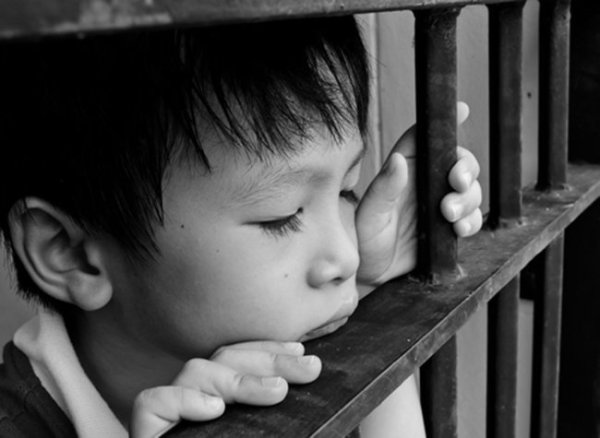 It is not necessary that only intimate and romantic relationship can bring about emotional abuse. The emotional abuse can happen between the mother-son or daughter, parent and the child, or vice versa, between the co-workers, between the friends, amongst the official relations or even casual acquaintances. But often the position wielding stronger power would indulge into such an abuse making use of the power inherent in the opposition.
 Threatening to either break the relationship, of leaving the person alone or even threatening to harm physically the victim or self ,defaming or spoiling reputation amongst the friends and family, of taking the kids away are some of the ways . Entire plan of the villain is to play vicious and manipulative mind games to create mental fear, awe and terror and kill the independent thinking of the victim.
 Regular Fault finding, pointing out shortcomings and negation of the person’s any and every act would upset even the most brave and positive person. The constant denial of any appreciation and consideration is a terrible abuse causing low self esteem and feelings of failure in the mind of the victim. Critical words turn into put-downs, which are not productive, it’s abusive. When someone is constantly putting you down or questioning your decisions, there’s a malicious motive behind their behavior.
 The abuser will have scant regards for victim’s any and every thought, suggestions opinions and would always use statements like,” you don’t know anything and hence don’t talk. A regular flow of fault finding, opposing and blocking, continues. The result of repeatedly having your opinions shot down or being told to shut up or that your thoughts don’t matter is that you stop standing up for yourself. You stop vocalizing your opinions. Ultimately no interaction can exist without open communication and the relationship breaks down.
 Passing the onus of doing everything and anything wrong on to the victim is one more of emotional abuse. Emotional blaming is a severe form of mental torture that results into emotional abuse. making the victim feel responsible for the acts , behavior not committed by him or her in another form of abuse, whether physical, sexual, or emotional. The perpetrator will make the victim assume or aver specifically that things that happened are his or her doing. Such acts behavior often takes place in privacy and hence none is in a position otherwise to refute the claim made.

 I love to go to a garden nearby to look at the plants growing and to savor their fragrant breeze full of oxygen and greens. And let me tell you I do love to speak to the plants in the morning as they open up their lovely flowers to the rising Sun and rebuild their energy which they gather from the sunlight .At home we do not have a lawn where we could grow these plants (we live in an apartment) . But on the top of the building where we have managed to rent a terrace we do have a few pots with plants. These plants have very tenderly been reared by my daughter with great care and love. I have seen the fresh flowers of white, red and yellow colors bloom to the plants virtually growing from little buds to the full blown beautiful flowers. Whenever I go the terrace I water them, talk to them and make sure they feel loved and taken care of by me and feel happy about this. I feel my conversing with my plants exactly is the reason these plants have grown from tiny saplings to the full grown plants adorning their smile into these flowers.
 Family will survive all storms with a little patience and perseverance
