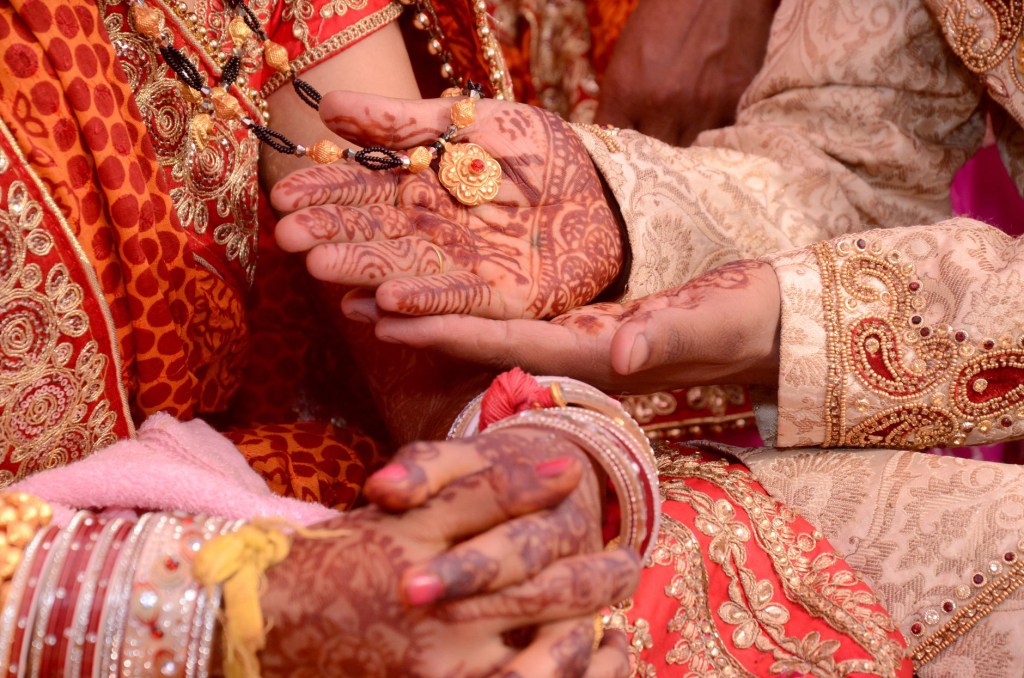
Everything you wanted to know about couple therapy..

Family therapist during meeting with a couple

In a country where approaching a psychiatrist/psychologist brings with it all kinds of taboos, fears and the unknown stigmas, reaching out to a family therapist by a couple simply can be a big uphill task. Most often the couple would prefer suffering in silence in their day to day disagreement and dispute rather than approach a professional family therapist. Approaching a therapist is often looked at as a step to lodging complaint against the partner. Couples shy off from reaching for the professional help because they do not want to disclose the problems they are having in their marriage to the family for one simple reason,”What would the people say “.

Let’s understand when do you need to approach a therapist and what process would couple therapy involve.

When you feel your communication with the spouse ends up into irritation and leads to the stomping of feet and rushing out of even a normal discussion quite regularly, the time to reflect is now.

When you feel your love has vanished and your acceptance of each other has been going down day by day, you need to be in touch with a family counselor.

When you carry strong resentment towards your partner on any account ,you should know,it is time to explore a session with a good family therapist.

When you feel you or your spouse has been losing interest in all kinds of spousal activities ,it is time to get a professional help to explore, understand, reflect and reconcile the challenges to your marriage .

Professional help can be available from an approved professionally qualified family therapist and not the usual agony aunts writing columns or providing readymade prescription to all problems.A good qualified professional family therapist necessarily should hold recognised postgraduate qualifications in family therapy in addition to a post graduate degree in psychology. The therapist should have a good standing in dealing with family therapy and counseling.

When you decide to eventually consult such a therapist you can be assured of total privacy and confidentiality of any discussion with the therapist.The professional code of privacy and confidentiality is absolutely sacrosanct for every therapist ,belying the fears “,What will people say”.

Let us now understand ,what would the therapy involve.

Usually the first session begins with the introductory process wherein the therapist is keen to understand as to what kind of issues,problems and disputes have been occurring in your family life and /or marriage.

The session involves knowing about your family history, the systems and the units of inner family circles within the family ,the communication system in your family and the power systems of the family.

The therapist is keen to understand the reasons for your contacting him/her i.e. the problems you are facing as a couple.How long has the problem been occurring and whether you have been consulting any other counselor earlier,if so what has been the impact of such counseling.

The therapist in this session evaluates the relationship the couple shares only on peripheral level as the depth of understanding and the misunderstanding would be assessed only in subsequent sessions and that too with a complete unbiased mind .It is not the task of the therapist to judge you,nor does the therapist acts as a complaint centre. The major task of the therapist is to understand the underlying emotional upheaval prevailing within the relationship of couple ,or amongst all other members of the family .

Though the families of the spouses or / and the spouses obviously look towards the family therapist as the complaint lodging centre ,but that definitely is an absolute misunderstanding of the process of family counseling .The therapist lends an unbiased ear and attention to every dispute,difference of opinion and misplaced emotions. The therapist is not a judge but a facilitator for bringing about better understanding of the misplaced emotions and feelings amongst the family members . It generally happens that the therapist is looked at as the mediator of the disputes by the family members,but mediation definitely has never been the scope of any family or couple counseling.

The therapist would also try to learn from you ,your career graph if working or in own business,the money position,the spending habits,financial interests if any and of course about the extended family members’ financial interests if any in connection with your finances.

Then again sometimes either of the spouses who has contacted the therapist,expects by default that the therapist would align with her or him ,but a true professional therapist approaches the counseling without any kind of preset mindset.The main task of the family therapist is to understand the tensions ,stresses and hindrances prevailing within the marital /family relationships and evolve better perception of the problems prevailing between the marital partners and other family members.

The couple issues could relate to any of the following:

Relationship of either spouse with in laws and other family members.
Household responsibility and commitments of members in honouring their responsibility.

Daily chores and spousal attitude towards sharing the chores.

Relationship of the spouses within and outside marital boundaries .

Marital compatibility of thoughts and emotions.
Sexual adjustments and acceptance.
Sexual orientation and attitudes towards partners.

Parenting plans ,children and parenting issues.

Communication pattern between the couple and the problems being faced in the communication.

Setting up priorities for the marriage and providing needed priority,time and space to each other in the marriage.

Modern couples also look for personal space in marriage as otherwise the relationship often gets suffocated with too much closeness .

Having understood all that has been delineated above, the therapist has to understand personalities of both the spouses ,the acceptance level or non acceptance levels of each others habits ,attitudes,opinions and daily functioning.

In fact a good therapist will help the couple evolve a new outlook and perception of their respective relationship provided ,the partners have the patience to continue with the sessions conducted over a long period of time varying from three to six months .the session may be conducted once or twice a week depending on the convenience and availability of both the spouses.

Though initially every session appears to be an exercise in raising grievances by the couple against each the other . The therapist’s intervention helps the partners read positive and negative cues of each others emotions in the right perspective and the couple soon moves from the warring zone to the negotiation levels. The negotiation is often done by the aggrieved partner to secure future as assurances and promises .The understanding levels though still remain far fetched and many more sessions will be needed to gradually establish a trusting common bond ,wherein an acceptance of each other is re-established amongst the family.

Continue reading “Everything you wanted to know about couple therapy..”

Healing Dysfunctional Family Relationships

Families are often envisioned as the cornerstone of love, support, and growth. However, the reality is far more nuanced, with many families grappling with the complexities of dysfunction, unresolved conflicts, and intergenerational trauma. In this blog post, we will deep-dive into the profound impacts of dysfunctional family dynamics, exploring real-life examples and therapeutic insights to understand the journey towards healing and restoring familial harmony.

The Ripple Effects of Dysfunction:

Meet Kritika and Vijay (names changed), whose experiences epitomize the enduring repercussions of dysfunctional family environments. Their stories resonate deeply with countless individuals who have experienced familial dysfunction. Kritika and Vijay, having weathered tumultuous family dynamics in their formative years, continue to grapple with the emotional scars, even a decade into their marriage. Their unresolved traumas have cast a long shadow over their parenting journey, as their children inherit the legacy of unresolved conflict and emotional turmoil.

Dr. Kritika, a pseudonym for a real individual, provides a poignant example of the intergenerational transmission of dysfunction. Raised amidst the daily tumult of her parents’ disputes, she and her siblings bore witness to a triangular drama that played out with agonizing regularity. Lines were drawn, allegiances shifted, and familial bonds strained under the weight of unresolved grievances .

The ripple effects of dysfunctional family dynamics extend far beyond the immediate participants, permeating the lives of subsequent generations. Individuals like Sejal, Sonia, Kamolika, Anand, and Sumit, though fictional in name, embody the collective struggles of those who have endured traumatic family events. From PTSD and anxiety to deep-seated mistrust and unresolved phobias, the psychological toll of dysfunctional family dynamics reverberates through every facet of their lives. Moreover, their own children and spouses find themselves unwitting participants in a cycle of dysfunction, perpetuating the cycle unless intervention occurs.

Understanding Triangulation:

Central to our understanding of dysfunctional family dynamics is the concept of triangulation. What begins as innocuous interactions can quickly devolve into accusations, misunderstandings, and unresolved emotions, with family members unwittingly assuming roles as perpetrators, victims, or mediators. Left unchecked, these patterns of dysfunction can become entrenched, eroding familial bonds and hindering individual growth.

Yet, amidst the turmoil, there is hope. Through innovative therapeutic approaches, families can take on healing and reconciliation, managing past trauma to embrace a future defined by mutual understanding and support.

The Path to Healing:

At our organization, we offer a framework for addressing the underlying issues that contribute to familial dysfunction, empowering you to break free from the shackles of intergenerational trauma. Central to this process is the cultivation of empathy and understanding, both within the family unit and in the broader community.

By creating a safe space for open dialogue and honest communication, we begin the healing process, allowing individuals to confront their past traumas and head towards a brighter future. Through individual and group therapy sessions, families learn to navigate conflict constructively.

For individuals like Kritika and Vijay, the journey towards healing is challenging, but ultimately important. By confronting their past traumas and embracing a future defined by mutual respect and understanding, they lay the foundation for a closer bond.

Conclusion

Through therapeutic support, families heal and reconcile, overcoming past trauma for mutual understanding. Together, we can break the cycle of dysfunction.

Are you a happy couple or an unhappy one but you are in love.Pick up some Tips for Building a life lasting Relationship

Ankur and Meeta have been married for  a number  of years now . They seem to have been having serious thoughts on their relationship already. The couple have been  staying with and without each other quite frequently in all these four years . One small tiff and the bags get packed . Meeta gets back to her mother’s house, or if she does not go out then it’s Ankur who would shift to the separate bedroom at the first floor of the house.  The accusations and blames keep them apart for a few months, till one of them apologizes.They come together and the honeymoon begins again .  Ankur’s mother has by now adjusted to their frequent bouts, as it has become a routine affair. Meeta wants Ankur should be dynamic in today’s competitive world and drop his laid back attitude .She would like him to move fast in his career ,and match the dynamism,she feels she is equipped with.For Ankur,the priorities are his family,his ailing mother who needs him and hence he feels satisfied with his progress.

couplesSomewhat similar  story has been going on between Bhuvan and Anita .Their 16 years of marriage has come to a stand still with both virtually accusing each other of neglect and  oppression .Anita blames Bhuvan of having neglected her  for  all their   marriage period. She feels she could have done better if she had adopted a career so that she could get away from the demands of married life. Bhuvan on the other hand feels oppressed, saying, ” She has been a very demanding wife and does not allow me to breathe freely .I need space of my own now”. he continues, ” from the day we began dating each other she has been like this always”.

But does it happen only after marriage. Not necessarily . Ashy and Neelu end up quarreling  on every date even though they would be making up soon. The new  issue would come at the next date .  For them ,it is wonderful feeling to be in love and date each other. The couple meets for awhile and then pine for each other till they meet at the next date.

images (6)While dating prior to the commitment made to each other for a long term relationship, everything is seen by the lovers  from behind the rosy shades of love and affection for each other. The emotions of possessiveness and yearning do not   allow the lovers to think of and bring in the mundane communication of a daily grinds of life.

It is definitely fine for short term love / date experiments .But being in a long-term relationship isn’t merely pining for the lover’s physical proximity and  intimacy alone. Being in long term relationships will involve managing and taking care of many other lives in addition to the lives of the lovers. And it is not an easy task.  Both people need to accommodate themselves to new family atmosphere and new relationships in their lives ( which come into their lives as an inheritance of marrying each other)  . May be a few years later  they will have to raise their own children  to make their family a complete unit.

The lovers need to  then communicate over many other issues in addition to the romance and love in marriage. The issues that gain priority over love may pertain to jobs and careers, money and household expense, household work and taking care of the babies, social, cultural and religious affairs, parenting and in many cases taking care of the aged and old in the families.

coupleAs a couple begins their journey into the long-term relationship of wedded bliss, their love for each other many a times may take a back seat and the love gets reduced to a few stolen kisses and quickies here and there. The couple forgets about nurturing and keeping the flame of love and desire for each other alive. Soon the infatuation of physical hunger wears off and then the focus shifts from the affection to the problems.

photo-1526736054478-78a346854f1bThe stark realities of need for more money, career priorities and of culture, of religion, and of family may cause concerns and small squabbles. Before these squabbles get blown into major issues and a beautiful relationship begins to disintegrate. The couple needs to understand that every relationship is important in life and more so with the one with whom you have to spend your life time.

Needless to say, that every difference and misunderstanding should be treated as worth working for and saving, once the infatuation begins to fade.

photo-1484660073876-32a014c54b24Communication in person and not on the social media , is the only tool and doorway to establish a better understanding. The couple, need to take  up all those problems that are causing strangled relationship .It is always good to keep the bedroom stories confined to  four walls of the personal  bedrooms .But should the couple  feel  they are  not able to communicate with each other without raising voices and angers , they should get the professional advise of the family  therapist and relationship  counselor.  The  airing of grievances in the family sitting room can aggravate the problems and cut down the love quotient. Isn’t it a fact that the love still exists, we just have to bring it to the fore again.

1e7cbe_3cd7dd541b844c689118f6e71c7c62d8

KEEPING MARIAGE ALIVE

Love is a beautiful song .But love is a lonely song if either of the love birds moves away .Love becomes a bitter song if the bitterness in relationship comes in .But love remains under all conditions sweet or bitter and the fragrance lingers on .

It is wonderful feeling to be in love and date each other. While dating prior to the commitment made to each other for a long term relationship, the couples meet for a while and then pine for each other till they meet at the next date. Everything is seen by them from behind the rosy shades of love and affection for each other.

The emotions of possessiveness and yearning do not bring in the mundane communication of a daily grinds of life. But being in a long-term relationship isn’t merely pining for the lover’s physical intimacy alone, it is a feeling of always being there ,always connected and always understanding without the use of words .

Being in long term relationships will involve managing and taking care of many other lives in addition to the lives of the lovers. And it is not an easy task. Both people need to accommodate themselves to new family environment and new relationships in their lives.

Over a period of time ,they will have to raise their own new family unit together to make their family home a happy abode to come to and partaking the joys of love and affection.

They however need to then communicate over many other issues in addition to the romance and love in marriage. Their issues that gain priority over love may pertain to jobs and careers, money and household expense, household work and taking care of the babies, social, cultural and religious affairs, parenting and in many cases taking care of the aged and old in the families.

As a couple begins their journey into the long-term relationship of wedded bliss, their love for each other many a times may take a back seat and the love gets reduced to a few stolen kisses and quickies here and there.

The couple forgets about nurturing and keeping the flame of love and desire for each other alive. Soon the infatuation of physical hunger wears off and then the focus shifts from the affection to the problems. The stark realities of need for more money, career priorities and of culture, of religion, and of family may cause concerns and small squabbles. Before these squabbles get blown into major issues and a beautiful relationship begins to disintegrate;the couple needs to understand that every relationship is important in life and more so with the one with whom you have to spend your life time.

Needless to say, that every difference and misunderstanding should be treated as worth working for and saving. once the infatuation begins to fade.

Communication is the only tool and doorway to establish a better understanding. Essentially the couple, need to take  up all those problems that are causing strangled relationship .

For further indulgence contact us

http://www.familytherapyindia.com

http://www.mansikpramarsh.com

Unseen Depression in Couples Can Stall Counselling Progress

Note: The names in this article are fictional, but the cases are real‑life situations.

When Deepti contacted me recently, she was worried about her husband, Sameer. For quite some time she had noticed changes in his behaviour. He was often irritable and generally not the man she knew. She believed he was depressed, but Sameer avoided admitting it or seeking help. After much persuasion she finally brought him in for a counselling session, and I suggested she sit in as well. Couples counselling often reveals hidden dynamics.

After several sessions it became clear the issue was not only Sameer’s depression; Deepti was struggling too, although she hadn’t realised it. Both were in denial about their emotional health, each convinced the other was the one who needed help. I see this often: it’s easier to blame a partner than look in the mirror.

Denial and deflection in relationships

A common pattern is the “It’s not me, it’s you” mindset around emotions. People dislike admitting something is wrong—especially when the word depression appears. The stigma makes admitting depression feel like defeat, so partners shift all blame to each other.

Deepti’s words show this clearly:

“Sameer says our problems exist because of me, and he tells people if I weren’t depressed we’d be fine. But honestly, I think he’s the one who’s depressed. He’s always complaining, and whenever things don’t go his way, he lashes out at me.”

While Sameer focused on Deepti’s supposed depression, she was battling her own. Neither saw how their emotional states fed off each other. It’s common: partners fixate on the other’s behaviour and ignore their own mental health.

Emotional alienation and its cost

Marriage and argument go hand in hand. Differences of opinion are normal. Trouble starts when every disagreement turns into a full‑blown fight and no one can build a bridge. Depression magnifies conflicts, making everyday issues seem larger and more upsetting than they are. Minor clashes feel like assaults on someone already vulnerable, and couples retreat into isolation.

For Deepti and Sameer, depression ran deep. Sameer’s mood swings and blame‑shifting grew from his own struggles. Deepti felt constantly on the defensive and withdrew. Both wore emotional blinders; neither saw how their feelings fed the problem.

Depression and marital conflict

Depression in relationships doesn’t always appear as expected. One partner may feel the other is hostile when that isn’t true. A small irritation suddenly becomes a crisis. With depression involved, everything feels heavier.

What looked like a simple concern—Sameer’s mental‑health dilemma—revealed that both partners were depressed and that their relationship nurtured it. He became irritable and emotionally shut down, while Deepti felt frustrated and isolated—classic signs of emotional exhaustion.

Sameer believed everything would improve if Deepti weren’t depressed; Deepti believed the same about Sameer’s negativity. Neither realised their shared emotional state lay at the heart of the problem.

Many see depression as something that happens to “other people” or as a personal failure, so couples deny it and point to each other’s actions. Yet mental health in relationships is rarely individual; it’s rooted in how partners relate. If one struggles, the other feels the effects—even if they deny it.

Seema and Jatin: a layer of complexity

Every couple’s story is unique. Seema and Jatin (names changed) were young doctors starting their careers and life together.

One day Seema threatened suicide because Jatin chatted with female colleagues. It stunned him. He hadn’t thought of them romantically, and no amount of explanation eased Seema’s suspicions.

That single incident became a pattern. Seema’s insecurity and emotional instability drained Jatin. He pulled back from friends and family to avoid the drama at home. He told me:

“Seema has idealised suicide since college. We’ve been together seven years, and she throws tantrums only with me. She’ll break up over the smallest things, stay silent for days, then act normal. It’s exhausting, and I have no one to talk to—she seems fine around others.”

The emotional disconnect was huge. Jatin felt he was drowning; Seema didn’t know how to express her needs without terrifying him.

The effect of unmet emotional needs

Depression often grows from unmet emotional needs. Feeling unheard or unloved can spiral into inadequacy and depression. Seema needed Jatin’s attention so intensely that when she didn’t receive it as expected, her balance collapsed.

Jatin tried to hold everything together yet felt hostage to Seema’s demands. Their lack of emotional bonding fed both depressions, and neither saw a way out.

Breaking the cycle

How can couples like Deepti and Sameer or Seema and Jatin break free? They must acknowledge that depression isn’t just an individual illness; it’s shaped by the relationship dynamic. Each partner needs to see how the other’s emotional state affects their own.

Individual therapy helps one person’s conflicts, but couples therapy is vital because it shows how the relationship contributes to the problem. With shared effort, partners can address the emotional disconnect that fuels depression and change it constructively.

The power of mutual support

Marriage is a partnership. Each partner must care about the other’s emotional well‑being; no one can fix everything alone. Mutual support lifts depression and strengthens the bond. Deepti and Sameer improved only when they both accepted their depression and searched for ways to heal together.

Seeking help together

If you or your spouse is depressed, both of you need treatment. Depression is treatable, but it requires effort from each partner. Couples therapy can help you overcome emotional hurdles and rebuild your relationship.

Two are stronger than one. United, couples can find their way back. This isn’t about blame; it’s about knowing you’re in it together. Marriage is a journey, and depression can strain even strong relationships, but it doesn’t have to define them. Acknowledge its role, seek help, and face the road ahead as a team.

We offer family, relationship, and marriage counselling for families, men, women, and couples—whether you have children, are newly married, are considering separation, are divorcing, or are facing any relationship difficulty. We help partners understand each other’s mental and emotional states, improve communication, and overcome obstacles blocking their happiness.

Get in touch with us today or write to us at mansikpramarsh@gmail.com.